Ads by google

Thursday, August 25, 2011

2012 Mercedes-Benz C63 V.S. 2011 BMW M3


The first photos of the facelifted 2012 Mercedes-Benz C63 AMG leaked on the interwebs today way ahead of its official unveiling at the 2011 Geneva Motor Show. As the BMW M3 Sedan received a design facelift in 2009, the 2012 C63 AMG goes through a series of cosmetic changes.
On the outside, the C63 AMG gets a set of SL-inspired headlamps. Car’s front fascia is new with rectangular daytime running lights, a wider center opening, a reduction in vertical gill count to one per side—and includes a grille with one fewer horizontal bar.
At the rear-end, LED taillights match the flashy front-end. The C63 AMG leaked features one of the Development Package models, which is visually differentiated by its carbon-fiber trunklid spoiler and two-piece front brake rotors with red calipers all around. The rear fascia also features a black diffuser portion now extending a little more up the bumper.
The standard car will wear a new twin-five-spoke 18-inch wheel design. Inside, the C63 gets the same updates as the C-Class models: a reworked dash with a 5.8-inch central display running a new interface and a crisp 4.5-inch color display in the gauge pod. AMG opted to retain the 6.2-liter V8 instead of fitting its new 5.5-liter biturbo mill, so output remains at 451 horsepower and 443 pound-feet of torque. The Development Package will reportedly stick around for 2012, raising output to 481 hp and nixing the 155 mph limiter to allow the C63 to top out at 174 mph.
The 2012 C63 AMG will go on sale this fall. Pricing hasn’t yet been announced, but car magazines speculate a price point around $61,000.
As with any new Mercedes or other competitors’ cars, we put together a comparison against its counterpart in the BMW lineup, in this case, the 2011 BMW M3 Sedan, E90 bodystyle.
In our opinion, the C63 AMG facelift is quite successful with design lines close to the SL model. The front-end is more aggressive and imposing. Inside, the new interior is a step-up from the previous iteration.

2011 Mercedes Benz E350 4MATIC vs. 2011 Volkswagen CC

                       2011 Mercedes Benz E350 4MATIC vs. 2011 Volkswagen CC2011


Another segment in our “Luxury without the price tag” series – 2011 Volkswagen CC vs. 2011 Mercedes Benz E350 4MATIC.
With new cars, you get what you pay for right? Well – kind of. Sometimes you get more than you pay for…or even bargained for. Volkswagen is one of those manufacturers that consistently provides more bang for the proverbial buck. The VW CC is a shining example of that value standard in providing best-in class features at a “how’d they do that?” price point.
The new 2011 Volkswagen CC is a luxury performance European sedan. The 2011 VW CC is an incredible bargain considering value, and an even greater value when considering its rivals. This time we’ll compare and contrast the 2011 Mercedes E350.
The two models we’ll be pitting against each other for this comparison will be the 2011 Volkswagen CC VR6 4MOTION vs. 2011 Mercedes Benz E350 4MATIC. While the spec sheets look similar, and they’re definitely in the same class…only one shines clearly above the other when you consider what you get for the dollars that you spend.
The technical data:
Volkswagen CC VR6 4MOTIONMercedes Benz E350 4MATIC
Engine3.6L DOHC V63.5L DOHC V6
Horsepower280 HP268 HP
Torque265 lb/ft258 lb/ft
Valves4 per cylinder4 per cylinder
Displacement3599 CC3498 CC
Compression Ratio12.0:110.7:1
Transmission6 speed TipTronic7 speed Automatic
Fuel Economy17 city – 25 hwy16 city – 24 hwy
0-60 Times6.2 seconds (Est.)6.5 seconds (Est.)
MSRP$40,390 $51,900

The 2011 Volkswagen CC bests the Mercedes Benz in just about every category…well – besides price. A full $11,500 less expensive than the Mercedes, the Volkswagen CC certainly doesn’t compromise in any category. It’s more powerful, quicker to 60 MPH, and better with fuel economy. All the while saving you enough money to take give the whole family iPads – on a beach in Hawaii – while your new LED Flatscreen is being installed at home.
Come drive and compare the 2011 VW CC at Rusty Wallis Volkswagen. We even have some 2012 VW CCs in stock. What model(s) should we compare next? Comment and give us your suggestions.

Saturday, August 13, 2011

Mercedes-Benz SLS AMG

The advanced AMG 6.2 litre V8 motor makes the SLS AMG one of the most powerful sports cars in its class. The V8 high-speed engine with 6208 cc capacity is a completely modified version of the AMG 6.2 litre V8 basic engine. The 8-cylinder engine responds to the slightest movement of the accelerator with superb agility across the entire engine speed range and displays the typical features of a high-performance racing car.

The maximum output of 563 hp is achieved at 6800 rpm. The maximum torque rating of 479 lb-ft is reached by the 8-cylinder, naturally aspirated engine at 4750 rpm. Such enhanced performance was achieved by completely redeveloping the intake system and overhauling the valve assembly and camshafts. The use of two flow-optimised exhaust manifolds and the derestriction of the exhaust system provide a significantly improved cylinder charge, which generates breathtaking power. Despite the increased load, engine weight has been reduced to 206 kg through targeted weight optimisation. In terms of the power-to-weight ratio, the AMG 6.2 litre V8 engine occupies a leading position compared to competitor production sports cars.

The gullwing model accelerates from zero to 100 km/h in 3.8 seconds and achieves a top speed of 317 km/h.

The conversion to dry sump lubrication allows a significantly lower engine mounting position. The resulting lower centre of gravity enables exceptional lateral acceleration when cornering and generates scintillating vehicle dynamics.
The functional highlight in the interior is the AMG DRIVE UNIT inclined towards the driver. Finished in aluminium, it is also available in real carbon.

Enjoy the jet-inspired design of the new E-SELECT selector lever for the AMG SPEEDSHIFT DCT 7-speed sports transmission. The driver can choose between P, R, N and D modes by simply touching lightly on the drive-by-wire system. If the vehicle is stationary, the park position is activated by simply pressing the P button – this also happens automatically when the engine is switched off. The rotary control switch for drive modes (including the Race Start function) and buttons for engine start, ESP® functions, AMG memory function and the extendable rear spoiler are also located here.

KEYLESS-GO makes locking, unlocking and starting the SLS AMG much easier. The vehicle is locked/unlocked automatically by simply pressing a button on the transponder. The engine is started using the central start/stop button on the AMG DRIVE UNIT in the cockpit.

The AMG instrument cluster (including AMG main menu with RACETIMER) features two puristic round dials within the driver’s field of vision. They provide key information, including road speed, engine speed, fuel level and engine oil temperature. Between the round dials, the driver receives additional data, including kilometre reading, range, fuel consumption, driving distance, driving time and average speed. The instrument panel also features an upshift indicator, which uses seven LEDs to indicate the best time to change gear.
State-of-the-art restraint systems meet the traditionally stringent requirements of Mercedes-Benz regarding passive safety. 3-point seat belts with tensioners and belt-force limiters are included as standard on the Mercedes-Benz SLS AMG. The safety system also boasts eight airbags: two adaptive airbags for driver and passenger, one kneebag each for driver and passenger, two sidebags integrated in the seats and two separate windowbags which are deployed from the waistline of the gullwing doors. The SLS AMG body features outstanding rigidity and deformation capacity thanks to the lightweight construction of the space frame. In the event of a crash, the collision energy can be absorbed, protecting the occupants from injury.

A range of components for the integrated ADAPTIVE BRAKE system make a key contribution to active safety. The system enhances ride comfort and safety by, on the one hand, employing dynamic control systems ASR, ESP®, ABS and BAS to support critical driving manoeuvres, and, on the other, providing convenience functions to master challenging driving scenarios. These include the HOLD function, which acts like a parking brake and can be activated by briefly depressing the brake pedal. The HOLD function keeps the vehicle from rolling unintentionally at traffic lights or in stop-and-go traffic. Hill-start assist prevents the vehicle from rolling backwards or forwards unexpectedly, e.g. when pulling away on a slope and changing from the brake to the accelerator pedal. The "brake drying" function ensures that full braking power is available even under wet conditions. And with the "priming" function, the system reduces the brake response time

Thursday, June 23, 2011

2011 Lexus GS 350

The 2011 Lexus GS 350 carries over mostly unchanged from the previous year.

Introduction

On its own merits, the 2011 Lexus GS 350 is a fine choice as a luxury sport sedan. It delivers performance, prestige, comfort and plenty of upscale features to please some of the most discerning of shoppers. Pit the GS 350 against some of the competitors from Europe, however, and its appeal fades, as those sedans seem to do most things just a little bit better.
The GS 350's drawbacks, as minor as they are, include a bit less headroom and a less responsive suspension. For average-sized drivers with little desire for athletic handling, these faults are easily forgiven, since the Lexus excels in nearly every other category. The quiet and calm cabin delivers segment-leading comfort while enveloping occupants in top-notch materials and expert craftsmanship.
The 3.5-liter V6 produces an ample 303 horsepower to give the GS 350 relatively swift acceleration, which should satisfy the vast majority of luxury sedan buyers. There is also a V8-powered GS 460 for more power-hungry drivers and a slightly more fuel-efficient GS 460h hybrid (both of which are covered in separate reviews). Regardless of which GS model you might be interested in, you can expect an abundance of standard features and state-of-the-art safety systems.
Among the 2011 Lexus GS 350's competitors, the most appealing ones come from Germany. The BMW 5 Series offers more cabin space and higher performance. The Mercedes-Benz E-Class is hard to beat in terms of style and prestige, while the Audi A6 presents a well-rounded and understated alternative. Luxury sedans hailing from Asia are also worth a look, with the Hyundai Genesis representing a relative bargain, as does the Infiniti M37 with an added dash of performance. Even though the 2011 Lexus GS 350 might not be a front-runner in this segment, its reputation for reliability and quality should not be overlooked.

Body Styles, Trim Levels, and Options

The 2011 Lexus GS 350 is a midsize luxury sport sedan offered in a single, well-appointed trim level. The related GS 460 is reviewed separately.
Standard equipment includes 17-inch alloy wheels, automatic xenon headlights, foglights, a sunroof, power trunk closer, auto-dimming mirrors, keyless ignition/entry, leather upholstery, dual-zone automatic climate control, a power tilt-and-telescoping steering wheel, 10-way power front seats with driver memory and lumbar adjustment, Safety Connect emergency telematics, Bluetooth phone and audio connectivity, and a 10-speaker stereo with six-CD changer, satellite radio and USB/iPod interface.
The Luxury Value Edition package adds a 14-speaker Mark Levinson surround-sound audio system, a hard-drive navigation system, real-time traffic and weather, a rearview camera, voice controls, Bluetooth phonebook downloading and enhanced telematics features.
Other options include an adaptive suspension, 18-inch wheels with summer tires, adaptive cruise control (includes a pre-collision system), adaptive headlights, automatic wipers, heated and ventilated front seats, a power rear sunshade and a wood-trimmed steering wheel. Note that the availability of optional feature for the GS depends on the region where you're shopping.

Powertrains and Performance

Powering the 2011 Lexus GS 350 is a 3.5-liter V6 engine that produces 303 hp and 274 pound-feet of torque. A six-speed automatic with manual shift mode is the only available transmission, but buyers can choose between rear-wheel drive and all-wheel drive.
In Edmunds testing, a rear-drive GS 350 accelerated from zero to 60 mph in a brisk 5.7 seconds. The EPA estimates fuel economy at 19 mpg city/26 mpg highway and 22 mpg combined, while the all-wheel-drive version rates a bit less at 18/25/20.

Safety

Standard safety features on the 2011 Lexus GS 350 include antilock brakes with brake assist, traction control, stability control, front and rear side-impact airbags, front knee airbags, side curtain airbags and active front head restraints. Safety Connect, a traditional telematics service with automatic collision notification, stolen vehicle locator and emergency assistance button is also standard. Adding the optional adaptive cruise control includes a pre-collision system that detects impending collisions and responds by pre-tensioning the seatbelts and activating brake assist.
The Insurance Institute for Highway Safety awarded the GS 350 its highest rating of "Good" for both frontal-offset and side-impact collisions. In Edmunds brake testing, a GS 350 with 18-inch wheels and all-season tires came to a stop from 60 mph in an excellent 114 feet.

Interior Design and Special Features

Upholding Lexus' reputation for finely crafted interiors, the 2011 GS 350's cabin surrounds occupants with supple leather and rich wood and aluminum trim. Average-size adults will fit comfortably, but taller passengers may desire a bit more headroom -- at least compared to other sedans in this class. This is especially true for those relegated to the center rear seat, which is slightly elevated compared to the outboard seats.
Our gripes are minor and include less-than-intuitive audio controls and a distracting glare from the highly polished wood trim. The GS reclaims some points for its optional high-resolution touchscreen and easy-to-operate navigation system.

Driving Impressions

The 2011 Lexus GS 350 delivers sufficient V6 power to please the majority of drivers as well as a comfortably smooth ride and respectable handling. Those expecting the type of athleticism found in other sport sedans may be disappointed with the Lexus' more leisurely reactions when cornering. The brakes can be a bit touchy at first, but they offer a solid feel and competitive performance. The AWD option should be of interest to buyers in areas with inclement weather, while the V8-powered GS 460 should satisfy drivers with a larger appetite for power.

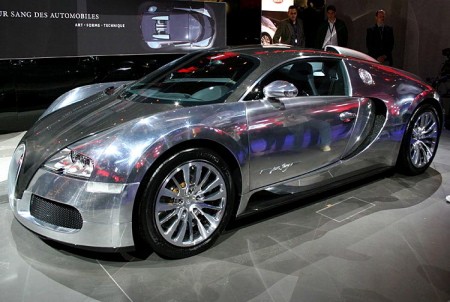
Bugatti Veyron Price

The Bugatti Veyron is not just any car, it is a super car. And its’ super sport version has the claim
to fame of being the fastest on road vehicle with a top speed of 431,07 km/h. So if you dream of
being the next Tom Cruise, and have upwards of $100,000 in spare cash, perhaps you would like to
follow in the footsteps of the rich and famous and purchase your very own Bugatti Veyron.
As a general rule of thumb, if you have to ask how much it will cost you to own one of these
Bugatti / Volkswagen super cars, then the answer is you don’t have enough. Price ranges can vary,
of course depending on if you are prepared to settle for a second hand version, or if only new
will do .A new Bugatti Veyron will cost 1.7 million dollars for a standard version, and a huge 2.4
million dollars for the super sport version. And this is not the type of car that is available on the
normal forecourt or in a showroom.

The Bugatti Veyron is only available from specialist dealers, these who you will find by searching
the Internet. Today we do all our business and shopping on the Internet, be it for a new home, a car,
or simply the weekly groceries. So a good starting point when wanting to become owner of one of
these super cars is to surf the Internet. Here you will see exactly the price range that exists, and that
you will be lucky to find a second hand model for less than 1 million dollars.

These cars are not like everyday cars, and are therefore not available in the way a normal car is.
If you wish to own a brand new Bugatti Veyron, then the only way to go about this is to contact a
dealer who will discuss the finish you require etc. Bugatti Veyrons are not standing in the forecourt
ready for you to purchase them, they have to be ordered. Then this enables you, through talking
with the dealer, to select the exact model, color, finish etc that you require. If you are going to
spend up to 2.4 million dollars on a car, then you expect to be able to choose exactly what you want
right down to the last detail!
If you are looking to buy a second hand Bugatti Veyron, then the chances are that you will be
able to find one advertised on the Internet also, in sections for specialist cars. You should still
look to pay upwards of 1 million dollars, although you may be very lucky with a private deal. But even if you get an used bugatti, the bugatti veyron price still will be a nightmare.
However, when buying such a pricey car from a private dealer, you must be overly careful that all
the paperwork etc.. is correct and that the ownership documents are all as they should be. A Bugatti
may also be found on e bay, and therefore the pricing will be like that of an auction. In this case too,
you must take extreme car that everything is above board
.

Tuesday, May 31, 2011

2011 Mercedes-Benz SL550 Night Edition news, pictures, and information

The 2011 Mercedes-Benz SL coupe/roadster line features the limited-edition SL550 Night Edition, which is painted in matte-finish designo Magno Night black with a black premium leather interior. Only 100 of this exclusive model are available in U.S. showrooms.

Specially developed for the SL550 Night Edition, the designo Magno Night black paint highlights the dramatic lines of the SL body. The Night Edition is also identified by the two-tone finish of its 19-inch AMG five-spoke light-alloy wheels, as well as silver front brake calipers with 'Mercedes-Benz' script and darkened headlights and tail lights.

A striking contrast of dark black premium leather and bright chrome trim fills the interior, with the sports steering wheel, shift lever and roof lining trimmed in black. Newly-designed seats have eye-catching arrow-type stitching and contrasting silver accents, including the vents of the AIRSCARF® system, which bathes occupants' neck area with warm air in cooler weather when the convertible top is down.

All 2011 SL coupe/roadster models now come with an enhanced tire-pressure monitoring system, HD radio and a satellite navigation system with SIRIUS real-time traffic information. Non-AMG SL models are also equipped with Direct Steer, which uses variable-ratio gearing in the steering rack to provide impressive on-center steering feel, with even higher responsiveness beyond the first five degrees of steering angle.

All Mercedes-Benz SL roadsters are available with AIRSCARF, an innovative feature that can extend the open-air driving season into the cooler months. Another first from Mercedes-Benz, AIRSCARF is an extra heating system built into the driver and passenger seats.

The AIRSCARF neck-level heating system blows warm air from the head restraints of the driver and passenger seats, allowing occupants to cruise comfortably with the retractable hardtop open in cooler temperatures. Testing revealed that warming just a relatively small area around the neck dramatically improves comfort in cooler weather.

Standard on the SL65 AMG model (and optional on the SL550 and SL63 AMG), the AIRSCARF heating system even compensates for changes in air temperature and vehicle speed. AIRSCARF uses a heating element made of barium titanate, which heats up in a matter of seconds when electrical current is applied
.
At the push of a button, the SL's retractable hardtop can be fully opened or closed in just 16 seconds, dramatically transforming the car from a quiet, weather-tight coupe to a top-down, open-air convertible. A hydraulic pump and 11 computer-controlled hydraulic cylinders power the system, and roof operation is controlled by a switch on the center console. Its folding 'clamshell' design allows for a cargo area of 7.2 cubic feet when the top is down. With the top up, the trunk holds 10.2 cubic feet.

Friday, May 20, 2011

BMW 335i Convertible

BMW dealer handed me the plastic fob, he insisted I drive the 335i Convertible with the top down. Despite the cool, foggy San Francisco weather, I held the plipper’s unlock button down and watched the show. As the hardtop began its elaborate three part dance into the trunk, I felt that old familiar flutter. The feeling was born when I started driving lessons in my Dad’s 1963 Chevrolet Impala rag top, survived my first car (a 1962 VW Beetle convertible) and lead to my current stable of drop tops. Would the 335i live up to its predecessors?
The 335i Convertible’s roof design preserves its tin top twin’s clean lines. The drop top's rear deck provides the main visual difference between the two models; the convertible’s is significantly larger and thus, more handsome than the sedan's. Other than that, the convertible’s got a chrome strip outlining the retractable roof, a sat/nav dingus on the trunk lid (it wouldn’t survive roof origami for long) and panel gaps on the rear roof pillar. Both vehicles offer such an aesthetically elegant design that they almost seem, dare I say it, Italian.

I intended to drive with the top down for a few blocks. A few blocks turned into a few miles and before I knew it, I’d driven 60 miles, moving from the city fog to Napa Valley sunshine. The 335i Convertible’s windshield is pushed well forward; you feel quite exposed to the elements. Luckily, the air movement in the cabin is well controlled– to the point where I eventually noticed that I was driving lethargically. So I installed the roof and prepared to attack the back roads.
Exploring the gizmology, I became convinced that Bimmer’s boffins have decided to make it as difficult as possible to make adjustments, so that iDrive seems better by default. For example, I wanted to adjAnyway, with the roof in place, the 335i Convertible’s body integrity is luxuriously outstanding. Many retractable hardtops creak and groan on rough roads. Although footwear differences between the two models may account for the aural disparity, I swear the 335i Convertible is quieter than the 335i Coupe. The tin top dished all the silence I needed to fully enjoy the Bimmer’s superb sound system and my easily paired Bluetooth compatible phone.
Which was just as well: BMW could have phoned-in the 335i Convertible’s dynamics. All its controls and responses felt heavier and more remote than the coupe’s. Turn in wasn’t nearly as crisp. Braking seemed far less immediate. Worst of all, the convertible’s tardy throttle response evoked an unreasonable facsimile of turbo lag. In the 335i coupe, simply thinking about the go-pedal brings immediate satisfaction. In this application, you have to step on the pedal like you mean it.
ust the turn signal so that it winked thrice when lightly touched. The manual doesn’t explain this procedure, so I will.

Tuesday, May 10, 2011

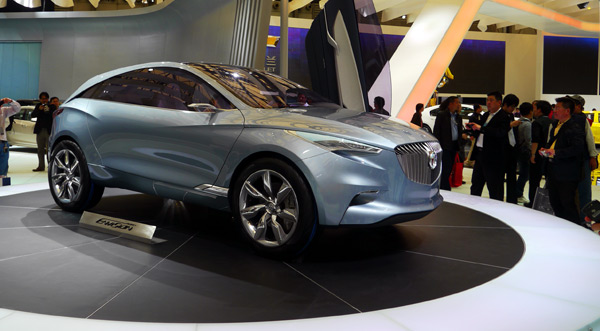
Buick Envision – a vision of something else?

Buick is one of, if not the, most successful and well-known ‘import’ car brand in China. GM has reaped the rewards of investing heavily in China so clearly, there’s some logic in taking the brand into the Crossover/SUV space, a market that’s set to mushroom in the next few years. Yet this Buick concept confused many observers, including us. It’s not bad, per-se, yet nor, crucially, does it bring anything new or innovative to the SUV concept party. Most worryingly it also fails to feel in any way authentically Buick.
Strip the clumsily-resolved waterfall grille from the front and you’re left with a car that feels like a mixture of design elements we’ve seen from other OEMs recently, particularly Mazda. It’s clear to see that some of the ideas behind its surface treatment were interesting and powerful in their own right, but zoom in on them and there’s an awkaward clash of lines and some difficult surface intersections. In fact, many of these are so sharp and acute that, considered as a whole with its interior (which in theme and colour and trim treatment reminds us of the ULC concept), we actually think this vehicle would fit better under GM’s Cadillac brand. The question is, does this matter for the Chinese market? Thoughts in the comments please.

Monday, May 2, 2011

Aston Martin DB6 VOLANTE - Front Right


This is the Aston Martin DB6 VOLANTE, One of the classic product of the British luxury sports car manufacturer. This car is a witness of William & Kate’s wedding on Friday, 29 April 2011 date last. This classic car was chosen to be a ride by William and Kate to attend the wedding ceremony of the largest in this century. Aston Martin DB6 VOLANTE MKII Band, in Seychelles blue. It belongs to Prince of Wales, who has had the car since 1969.

Exterior

Asron Martin DB6 and DB5 almost identical twins, the biggest difference is on both side panels and rear wheelbase profiles are equipped Kammback. The back of the car, combined with the rear axle was moved-and wheelbase (95 mm) 3.75-inch extended, the other significant change is the higher car windshield, rear seat space in the wider, optional power steering, air conditioning optional. Aston Martin DB6 VOLANTE Wedding’s Car of William & Kate, in other modifications like the bridal car. Front plate using writing the letter “L” in red, with a heart in each corner, which means “new driver” or maybe “the new bride.” Then the front plate using the words “JU5T WED”, and some heart-shaped colored balloons adorned the rear of the car like any other bridal car.

Interior

The atmosphere is very classic feel while in the car, antique chairs, steering wheels a classic, with panels that are classic as well, as if we are in the 60′s when driving this car. Aston Martin DB6 VOLANTE to be very luxurious when used William and Kate at the wedding, perhaps the drive was a British prince and his wife.

Engine

Aston Martin DB6 VOLANTE Wedding’s Car of William & Kate is using the engine 4.0 L (3.995 cc/244 in ³) is configured cylinder straight-6 and tech twin-overhead camshaft (DOHC). This machine is capable of producing up to 282 bhp (210 kW, 286 PS) at 5.500 rpm (standard engine), and 325 bhp (242 kW, 330 PS) at 5750 rpm (optional Vantage engine). With power like that, Aston Martin DB6 VOLANTE Wedding’s Car of William & Kate capable of driving 0-60 mph (97 km / h), it only takes 8.4 seconds. and is capable of driving a classic car with a maximum speed of up to 150 mph (241 km / h).

Price

Prices at auction have ranged from $ 200,000 to more than $ 400,000 in recent years. But now the car is identified with the royal couple, the audience is only likely to grow and prices will almost certainly rise. It’s a very expensive car for the size of a classic car. But you will get the same car at The Royal Wedding William and Kate, Aston Martin DB6 VOLANTE.
sponsored links

2011 Icona Fuselage


The Shanghai Auto Show came and went with one star-studded concept slipping under the radar from a little unknown company called Icona Shanghai. Icona is a design studio based out of China and focusing on projects in China and Asia. Their latest project comes to us in the form of the , a concept that incorporates a design that is on a completely different level than many concepts we’ve seen in awhile.
The Fuselage owns the futuristic look with a unique body structure that starts with that sleek and defined front end. The front of the car paves the way for the rest of the body’s look which takes the shape of rippling waves going down the side and ending at a slightly upturned back end. The look is completed with polycarbonate alloy wheels and those sick gullwing doors.
The interior of the Fuselage seat four and gets a clean look with controls that remind us of the buttons found on a massage chair. No specific details were given on the goodies provided, but they say a picture is worth a thousand words and clearly, this interior is speaking volumes.
Considering this is a car for the future, no engine could possibly fill the space that only a motor can provide. The electric motors are placed next to the wheels and are powered by a 79 lb battery pack placed in the center. The Fuselage is said to sprint from 0 to 60 mph in 4.5 seconds and will hit a top speed of 124 mph.